
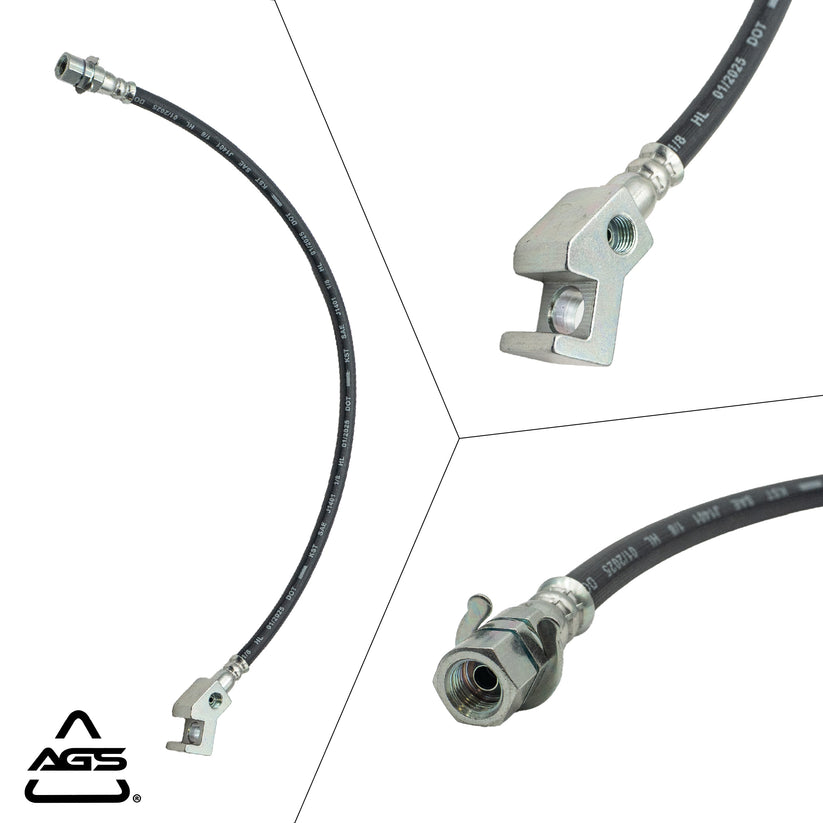
For the purposes of vehicle safety, the mind immediately goes to the advanced computer systems, airbags or even the thickness of the brake pads. But the most important factor of your vehicle’s stopping power is entirely dependent on a network of flexible tubes, called brake hoses. These unsung parts pump the fluid that’s required to transmit pressure from your foot pushing the pedal to the wheels. Brake hoses are subjected to the elements of road debris, heat and pressure and can become vulnerable to wear and tear, which can result in a catastrophic failure if they are not maintained. Knowing how to keep these life lines up and running is an integral part of being a good driver.
The Vital Function of the Hydraulic Lifeline
Before you can grasp the reason why maintenance is important, you need to have an understanding of what a brake hose does. Pressing the brake pedal pushes the brake fluid through the metal brake lines, flexible hoses, and to the brake mechanism at each wheel. Along the solid chassis of the car, metal lines are used, but accommodating the ongoing movement of wheels, steering and suspension demands flexible rubber or stainless-steel hoses.
These hoses are extremely durable, since they need to bend with every turn of the steering wheel and with each bumping over a road surface. They are made of a number of synthetic rubber layers, braided with inner fabric and capable of resisting pressures of up to one thousand pounds per square inch. Even though these are very soundly built, the constant flexing combined with the exposure to the elements means that brake hoses have a limited life and need to be regularly inspected.
Identifying the Warning Signs of Aging Hoses
Brake hose degradation may be evident in the appearance of the hose or in the way your vehicle operates. In the process of the routine visual check, carefully inspect the outer rubber sleeve for cracks, blisters and any chafing. A crack is a sign that the rubber is going bad and hardens when applying force when braking hard. If the blisters or bubbles show, then the internal structural braiding has broken and the high pressure fluid has caused the outer layer to bulge.
The most prevalent sign of a brake hose failure is a soft spongy brake pedal from the driver’s seat. Some of the pressure of the hose should be pushing the brake pads, but it isn’t when the inside of the hose has expanded or is ballooning under pressure. Also, if a vehicle veers to one side when braking it may be due to a collapsed hose on one side, which would cause the car to stop unevenly.
Preventive Maintenance and the Replacement Cycle
The best maintenance program for brake hosing is to replace them before they fail. There isn’t a universal rule when to replace a brake hose, but many automotive experts advise to have it checked at least annually, or when brake pads are replaced. Moisture can also seep through the tiny holes left by the rubber in the brake fluid over time causing corrosion or rust in the braking system.
It is important to replace brake hoses in pairs on the same axle when replacing brake hoses, so as to maintain even braking. If you’re a performance driver or regularly operate in extreme weather, adding stainless-steel braided brake hoses could offer you additional durability. The high-quality hoses are lined with a Teflon inn liner which is covered with a woven and bonded stainless-steel mesh to stop the hose from stretching at high pressures and give even greater defense from road debris.
Conclusion
However, brake hose maintenance is a vital part of vehicle safety which cannot be overlooked. The flexible lines are the main element that helps convert your physical action to hydraulic stopping power, and they take a lot of abuse each time you take the wheel. Visual inspections should be part of your routine service practices and should be performed as soon as a problem is noticed, in order to avoid mechanical failures that could prove hazardous. Takes care of your brake hoses and they’ll stop when you want them to, and you’ll see them stop—fast and reliably. Taking the time and investment into this relatively basic element is the best return an individual can have: the peace and safety of all road users.